The Project Manager Paradox
Walk into any digital agency today, and you’ll notice something peculiar: everyone seems to be a Project Manager. Not some people. Not a select few with proven track records of delivering complex initiatives. Everyone.
The title has become a catch-all solution for a very specific problem that nobody wants to acknowledge out loud: we don’t actually know where to place you, so here’s a title that sounds important.
A close friend of mine (someone who approaches workplace dynamics with the right dose of irony) recently shared this gem with me:
“You know, at our agency, confusion reigns supreme. Everyone is a manager of something. They told me I’m a Project Manager, probably because they couldn’t find a precise role for me. It seems like this title is coveted these days, so I accepted it.”
And there it is. The quiet part said out loud.
What Project Management Actually Means
Let’s be clear about something: Project Management is not an entry-level role. It shouldn’t be.
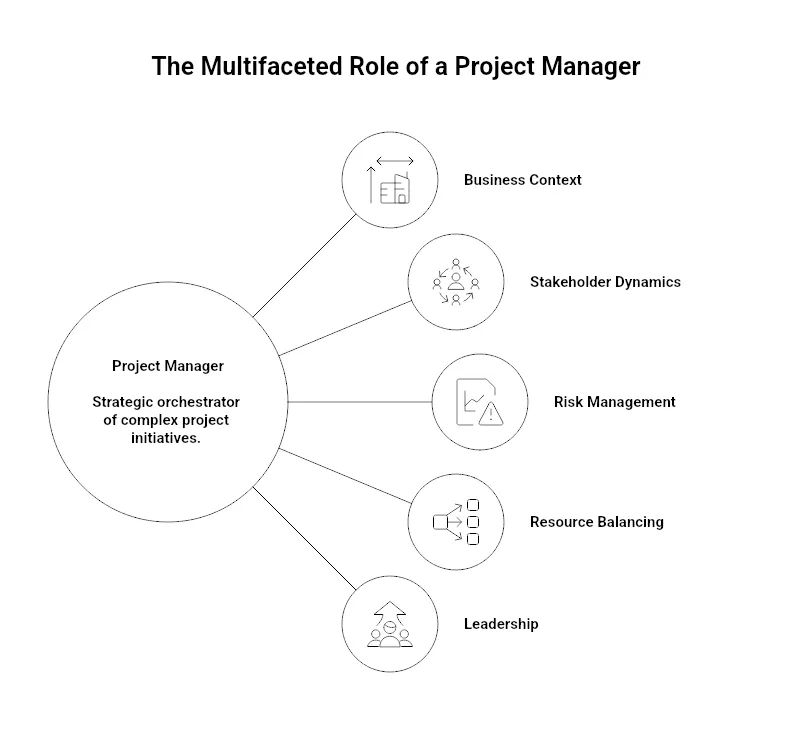
A true Project Manager is the strategic orchestrator of complex initiatives. They are the people who:
- Understand the full business context of what they’re managing—not just one vertical slice of it
- Navigate stakeholder dynamics across departments, clients, and teams with conflicting priorities
- Anticipate risks before they become crises, and have the experience to know which fires to put out first
- Balance scope, timeline, budget, and quality in real-time, often making trade-offs that require deep domain knowledge
- Lead without authority, influencing outcomes through clarity, communication, and credibility rather than hierarchical power
This is not a role you can pick up after six months of tangential exposure to “some specific aspect” of a project. It requires systemic thinking, business acumen, and hard-earned pattern recognition that only comes from seeing multiple projects succeed—and fail.
Yet increasingly, I see junior professionals handed the PM title after minimal experience, expected to coordinate initiatives they barely understand, managing stakeholders who have more experience than they do.
Why Is This Happening?
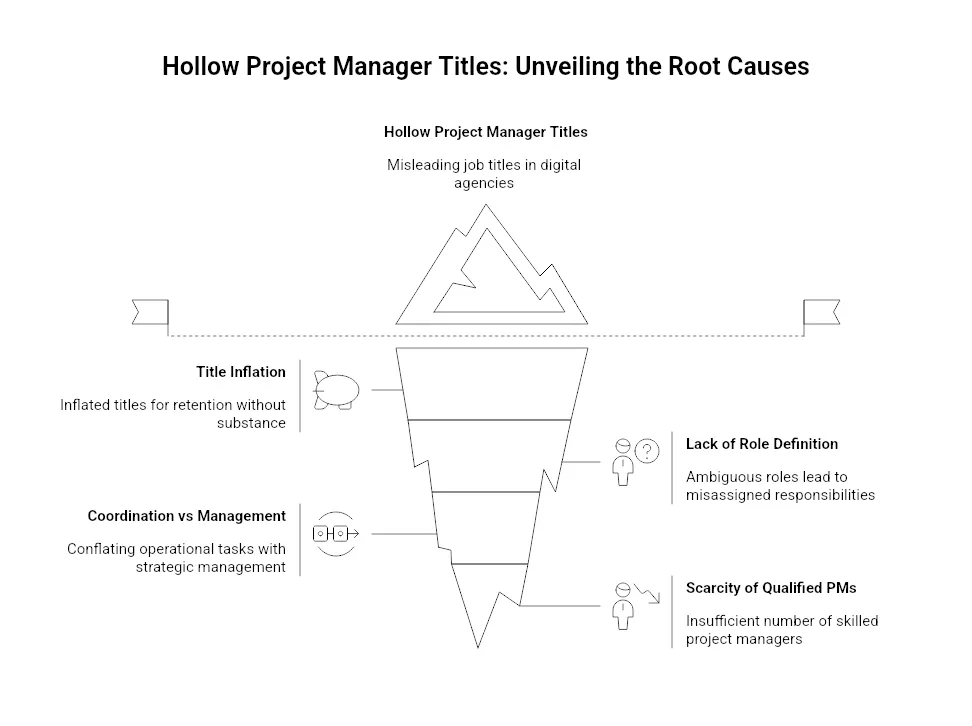
The proliferation of hollow Project Manager titles isn’t random. It’s symptomatic of deeper structural issues in how digital agencies and companies operate:
1. Title Inflation as Retention Strategy
In competitive markets, titles are cheap. Salary increases and real growth opportunities? Those cost money. So agencies inflate titles to create the illusion of career progression without the substance.
2. Lack of Role Definition
Many organizations operate in a perpetual state of structural ambiguity. When you don’t have clear role frameworks, “Project Manager” becomes a convenient bucket for anyone who doesn’t fit neatly elsewhere. It’s the professional equivalent of the junk drawer.
3. Confusion Between Coordination and Management
There’s a massive difference between coordinating tasks (scheduling meetings, updating spreadsheets, chasing people for deliverables) and managing projects (strategic planning, risk mitigation, resource optimization, stakeholder alignment). The former is an operational function. The latter is a strategic one. We’ve conflated them.
4. The Scarcity Problem Nobody Admits
And here’s the uncomfortable truth: maybe there just aren’t enough truly qualified Project Managers out there.
The Real Question
So let me pose this directly: Is the current reality, where agencies assign the Project Manager title to willing but underprepared individuals, actually a confession that genuine PM expertise is scarce?
Because if we’re being honest, finding someone who has:
- Deep technical or domain fluency
- Business strategy chops
- Stakeholder management skills
- Process discipline
- Leadership presence
…is rare. Really rare.
So what do organizations do when they can’t find or afford that caliber of professional? They lower the bar. They redefine the role downward until it fits whoever is available and eager.
The problem is that rebranding task coordinators as Project Managers doesn’t make them strategic orchestrators. It just creates confusion, sets people up for failure, and dilutes the value of the role itself.
Where Do We Go From Here?
I don’t have a clean solution, because this isn’t a problem with a simple fix. But I do think we need to start having more honest conversations about what Project Management actually requires and how we develop people toward that role. Another matter that we should consider is if some projects really need a PM at all, or if we’re creating bureaucracy for its own sake.
Because right now, we’re creating a generation of professionals who think they’re Project Managers because their business card says so—but who have never been given the training, mentorship, or real responsibility that would actually make them effective in that role.
And when everyone is a Project Manager, nobody is.

Leave a Reply